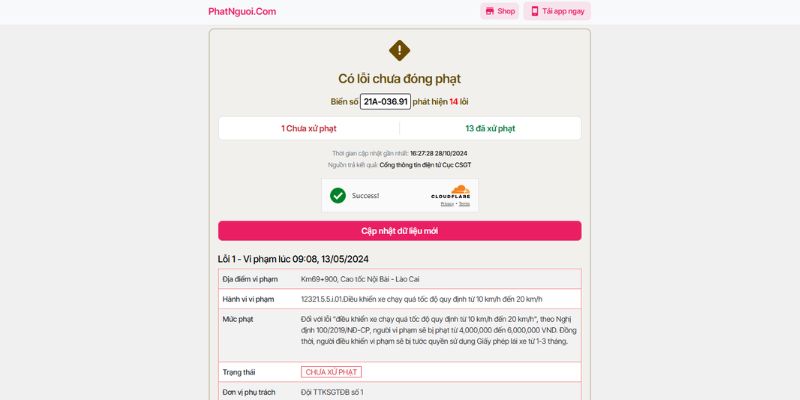
Yên Bái chính thức triển khai hệ thống phạt nguội từ ngày 1/3/2023. Nếu bạn người dân ở đây hoặc sắp di chuyển qua tỉnh Yên Bái mà chưa biết các điểm camera phạt nguội nằm ở tuyến đường nào, bài viết này sẽ giúp bạn thông kê danh sách camera phạt nguội tại quê hương Mù Căng Chải.
Lưu ý: 2 điểm đầu tiên trong danh sách camera phạt nguội Yên Bái có camera giám sát tốc độ. Cần tuân thủ tốc độ tối đa cho phép khi đi qua 2 tuyến đường này.
Các điểm còn lại sẽ theo dõi về tình trạng tuân thủ các quy tắc giao thông.
How Free Pokie Culture Shaped Australian Online Gaming, a Casinozoid Overview
Australia has one of the most distinctive gambling cultures in the world, and much of that identity is built around pokies — the colloquial term for electronic gaming machines that have been embedded in pubs, clubs, and casinos since the late 1980s. What began as a physical pastime tied to social venues gradually evolved into a digital phenomenon, and the transition from land-based machines to free online pokies reshaped how Australians engage with gaming more broadly. Understanding this shift requires looking at the regulatory history, the psychological appeal of free play, and how the online environment adapted to meet deeply ingrained local habits.
The Land-Based Legacy and the Rise of Digital Free Play
Electronic gaming machines were legalised in New South Wales clubs in 1956, though the modern video pokie era really took hold following deregulation across multiple states in the late 1980s and early 1990s. By the mid-2000s, Australia had approximately 200,000 poker machines in operation — one of the highest per-capita densities in the world. The cultural familiarity with spinning reels, bonus features, and variable reward mechanics created a population that was uniquely primed for the transition to online equivalents.
When broadband internet became widely accessible in Australia through the early 2000s, offshore gaming operators began targeting Australian players with browser-based versions of classic pokie formats. The Interactive Gambling Act of 2001 complicated this landscape significantly — it prohibited Australian-licensed operators from offering real-money interactive gambling to residents, but it did not explicitly ban players from accessing offshore sites, nor did it restrict free-to-play formats. This legal ambiguity created fertile ground for free pokie platforms, which could operate without triggering the same regulatory scrutiny as real-money services.
Free pokies served a dual function from the beginning. For players, they offered the familiar sensory experience — the sound design, the reel mechanics, the anticipation of bonus rounds — without financial commitment. For operators and developers, they functioned as demonstration tools and brand-building assets. Studios like Aristocrat, which had deep roots in the Australian land-based market, began releasing digital versions of their most popular titles specifically to maintain brand recognition among a generation of players moving online.
How Free Play Normalised Online Gaming Behaviour
The psychological mechanics of free pokies deserve serious attention because they played a measurable role in normalising online gambling behaviour across Australian demographics that might otherwise have been hesitant to engage with digital platforms. Research published by the Australian Institute of Family Studies and various state gambling authorities during the 2010s consistently noted that exposure to free-play formats lowered the perceived risk threshold for transitioning to real-money play. This was not an accident of design — it reflected deliberate product development strategies by software providers who understood the value of habituating players to interface conventions and game logic before any financial stakes were involved.
The catalogue of free titles grew rapidly between 2010 and 2018. Providers such as IGT, Konami, and later Pragmatic Play and NetEnt built extensive free-play libraries that mirrored their real-money offerings almost exactly. Australian players could access these through aggregator sites and dedicated review platforms, which began emerging as an important layer of the ecosystem. Resources like https://casinozoid.org/free-pokies/ reflect this aggregation model, where curated collections of free titles are presented alongside contextual information about game mechanics, volatility profiles, and software origins — serving the information needs of players who approach pokies with genuine curiosity about how the products work.
The 2017 amendments to the Interactive Gambling Act tightened restrictions on real-money services but again left free-play formats largely untouched. This reinforced the structural importance of free pokies within the Australian online gaming market. Platforms that could not legally offer real-money products to Australian residents could still maintain a presence through free-play libraries, and players retained access to an enormous range of titles without any legal ambiguity on their end. The result was that free pokies became a permanent and mainstream feature of Australian online gaming culture rather than a transitional stepping stone.
The Role of Software Developers and Platform Ecosystems
The development side of this story is often underappreciated. Aristocrat’s transition from hardware manufacturer to digital content provider is one of the more significant industrial shifts in Australian gaming history. The company’s acquisition of Product Madness in 2012 and the subsequent success of social casino apps like Heart of Vegas demonstrated that Australian-developed pokie content could achieve global scale through free-play and social mechanics alone. By 2019, Aristocrat’s digital division was generating revenues that rivalled its traditional gaming operations — a structural transformation driven in large part by the free-play model.
International developers entering the Australian market quickly learned that local preferences were specific and non-trivial. Australian players had strong affinities for certain reel configurations, bonus structures, and thematic content that reflected decades of land-based conditioning. The “feature” — a triggered bonus round with free spins or a pick-em mechanic — was essentially a non-negotiable design element for any title expected to perform well with Australian audiences. Studios that ignored these preferences in favour of generic European or North American formats consistently underperformed in Australian engagement metrics.
Platform aggregators responded to this by developing increasingly sophisticated filtering and categorisation tools. Review and aggregation sites began offering players the ability to sort free pokies by developer, feature type, volatility, and thematic content. This metadata layer transformed free-play access from a simple catalogue-browsing experience into something closer to informed product selection. Casinozoid, among other platforms operating in this space, developed detailed game profiles that went beyond surface-level descriptions to include return-to-player percentages, hit frequency data, and comparisons between similar titles — reflecting the growing sophistication of the Australian player base.
Regulatory Pressures and the Future Shape of Free Pokies
The regulatory environment surrounding free pokies is not static. The Australian Communications and Media Authority has progressively expanded its enforcement activities under the Interactive Gambling Act, and there is ongoing policy discussion about whether free-play formats that closely simulate gambling products should be subject to greater oversight — particularly given concerns about exposure among minors and problem gambling pathways. The 2023 review of gambling advertising regulations introduced new restrictions on broadcast advertising that, while primarily targeting real-money operators, signalled a broader governmental appetite for tighter controls across the gambling media landscape.
Industry responses to this pressure have varied. Some developers have introduced responsible gambling messaging into their free-play interfaces, including session time reminders and links to support services, even though these are not currently mandated for free formats. Others have moved toward age-gating their free-play libraries more rigorously. Casinozoid and similar platforms have incorporated responsible gambling information into their content architecture, acknowledging that the line between entertainment and risk normalisation is a genuine concern that the industry cannot afford to dismiss.
The technical evolution of free pokies is also accelerating. HTML5 migration, completed across most major studios by 2018, enabled seamless mobile play and eliminated the Flash dependency that had constrained the earlier era of browser-based gaming. More recently, developers have begun integrating free-play versions of their titles into social media environments and progressive web apps, further reducing the friction between casual interest and active engagement. Augmented reality prototypes from several studios suggest that the interface conventions of pokies may continue to evolve significantly over the next decade, though the core reward mechanics that make the format compelling to Australian players are unlikely to change in any fundamental way.
The trajectory of free pokie culture in Australia illustrates how deeply a gambling format can become embedded in a national leisure identity, and how digital technology amplifies rather than displaces that embeddedness. The shift online did not dilute the cultural significance of pokies — it extended their reach, diversified their formats, and created an information ecosystem around them that gives players more context and choice than the land-based environment ever could. What remains consistent across every phase of this evolution is the centrality of the free-play experience as both an entry point and a sustained form of engagement in its own right, distinct from real-money gambling but inseparable from the broader culture that surrounds it.