spot_img
HomePhạt Nguội TỉnhCamera phạt nguội là gì? Phân loại và cách thức hoạt động...

Camera phạt nguội là gì? Phân loại và cách thức hoạt động của chúng

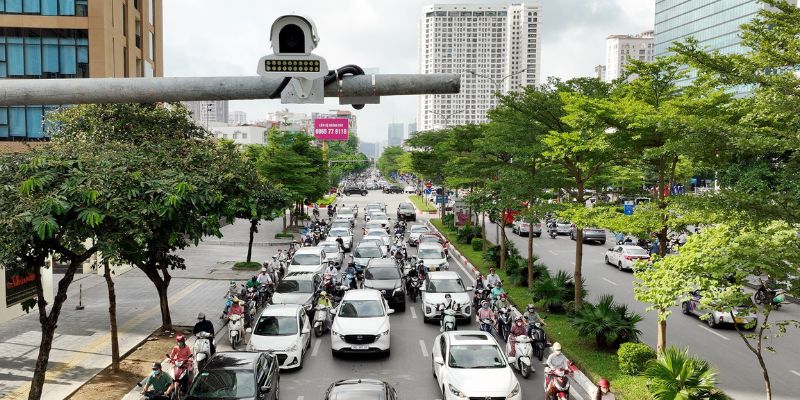
Camera phạt nguội là gì? Cách thức hoạt động của hệ thống giám sát này như thế nào? Hãy cùng Phạt Nguội tìm hiểu chi tiết về khái niệm và vai trò của camera giám sát nhé!

Camera phạt nguội là gì? Định nghĩa và vai trò
Định nghĩa camera phạt nguội

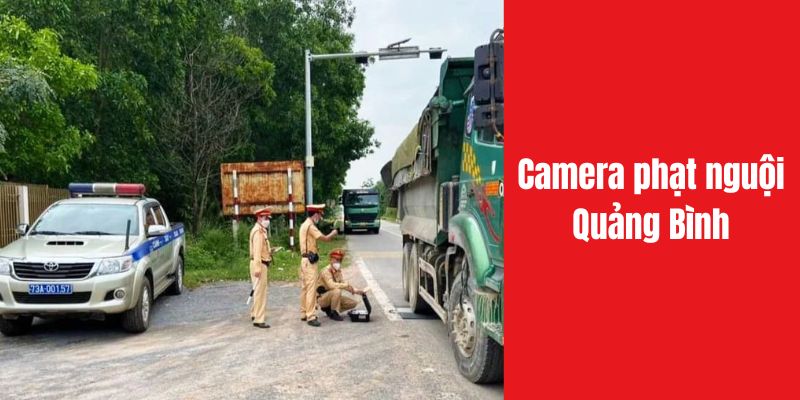
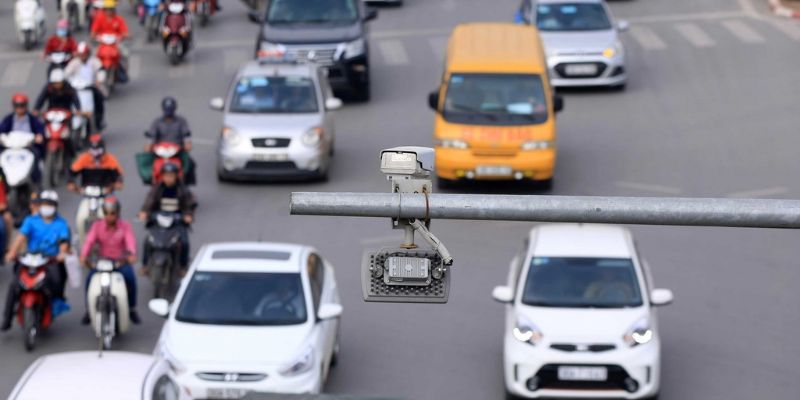
Camera phạt nguội là hệ thống camera được lắp đặt trên các tuyến đường trọng điểm, nhằm phát hiện các lỗi vi phạm giao thông để xử phạt sau. Một số lỗi vi phạm sẽ bị camera ghi lại đó là:

  • Chạy quá tốc độ: Camera ghi nhận khi phương tiện di chuyển vượt quá tốc độ cho phép.
  • Đi sai làn đường: Hệ thống phát hiện phương tiện đi vào làn đường không đúng quy định gây nguy hiểm cho người tham gia giao thông.
  • Vượt khi có biển báo cấm vượt: Camera giám sát và ghi lại các trường hợp phương tiện vi phạm biển báo cấm vượt.
  • Dừng đỗ trái quy định: Phương tiện dừng hoặc đỗ xe không đúng nơi quy định như trên vỉa hè hoặc đường cao tốc cũng sẽ bị camera phạt nguội ghi lại.
  • Vượt đèn đỏ: Đây là lỗi vi phạm mà camera phạt nguội thường phát hiện nhiều nhất.
  • Điều khiển xe quá trọng tải: Camera phát hiện khi phương tiện chở hàng hoặc chở khách vượt quá trọng tải cho phép gây nguy hiểm cho cơ sở hạ tầng.
  • Dừng xe trả hàng/trả khách sai quy định: Hệ thống giám sát và ghi nhận các trường hợp phương tiện dừng xe trả hàng hoặc trả khách không tuân thủ quy định gây cản trở giao thông.

Cách thức hoạt động của camera phạt nguội
Cách thức hoạt động của camera phạt nguội

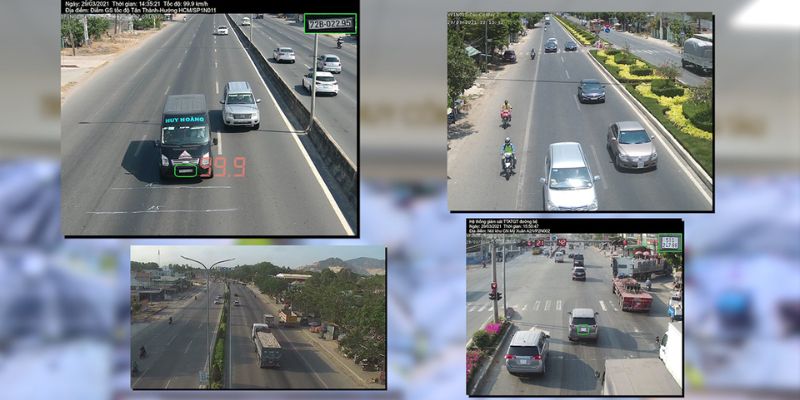
Camera phạt nguội hoạt động dựa trên công nghệ ANPR (Adaptive Number Plate Recognition) – công nghệ nhận dạng biển số xe vi phạm giao thông một cách tự động. Quá trình hoạt động của camera phạt nguội diễn ra như sau:

  • Bước 1: Khi phương tiện vi phạm đi qua khu vực có gắn camera, hệ thống sẽ tự động kích hoạt để ghi lại hình ảnh của phương tiện đó. 
  • Bước 2: Sau khi ghi lại hình ảnh, công nghệ ANPR sẽ tự động nhận dạng biển số xe từ hình ảnh.
  • Bước 3: Thông tin biển số sau khi nhận dạng chính xác sẽ được so sánh với cơ sở dữ liệu về các phương tiện vi phạm giao thông. Nếu trùng khớp, hệ thống xác định rằng vi phạm đã xảy ra và lưu trữ dữ liệu về vi phạm gồm biển số, thời gian, vị trí và loại vi phạm.
  • Bước 4: Dữ liệu vi phạm được truyền tới các cơ quan chức năng như Cảnh sát Giao thông để xử lý theo quy định.

Các loại camera phạt nguội hiện đại còn có khả năng giám sát xử lý đa làn đường và nhận dạng nhiều biển số xe cùng lúc. Điều này giúp nâng cao hiệu quả giám sát vi phạm giao thông trên các tuyến đường có mật độ phương tiện cao. Nhờ công nghệ này, việc duy trì và đảm bảo an toàn khi tham gia giao thông trở nên hiệu quả hơn.

Các loại camera phạt nguội

Phần này sẽ cung cấp cái nhìn tổng quan về các loại camera phạt nguội phổ biến cùng với những đặc điểm và ứng dụng của từng loại

Camera bắn tốc độ phạt nguội

Camera giúp bắn tốc độ để phạt nguội

Camera bắn tốc độ phạt nguội được thiết kế để phát hiện và ghi lại các trường hợp vượt quá tốc độ cho phép. Những camera này hoạt động tự động 24/7 mà không cần sự can thiệp trực tiếp của cảnh sát giao thông. Đặc điểm chính của camera bắn tốc độ phạt nguội:

  • Công nghệ: Sử dụng radar để đo chính xác tốc độ phương tiện.
  • Ghi hình: Tự động chụp ảnh hoặc quay video khi phát hiện vi phạm.
  • Độ chính xác cao: Có khả năng đo tốc độ chính xác đến km/h.
  • Hoạt động liên tục: Làm việc trong mọi điều kiện thời tiết, ngày đêm.
  • Xử lý thông tin: Dữ liệu vi phạm được gửi về trung tâm xử lý để ra quyết định phạt.
  • Vị trí lắp đặt: Thường đặt tại các tuyến đường có lưu lượng giao thông cao hoặc khu vực hay xảy ra tai nạn do chạy quá tốc độ.

Camera đèn tín hiệu 
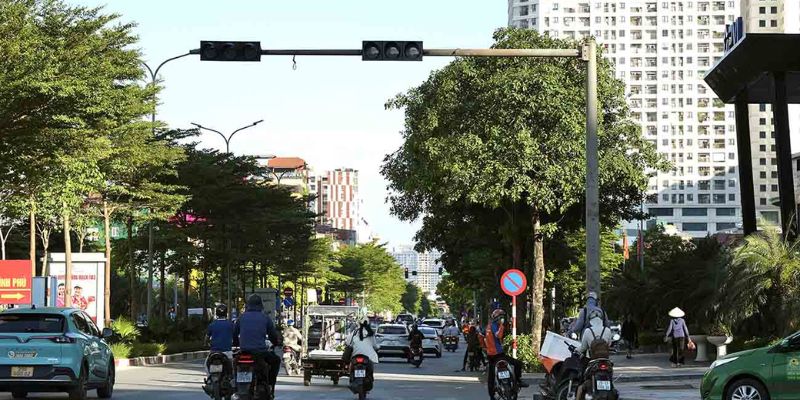
Camera phạt nguội đèn tín hiệu

What Casizoid Has Learned About No Deposit Bonus Regulations Across Canadian Provinces

Canada’s online gambling landscape is fragmented by design. Unlike federally regulated markets such as the United Kingdom or Malta, Canada delegates gambling oversight almost entirely to its provinces, which means that a promotional offer perfectly legal in Ontario may be structured very differently — or restricted entirely — in British Columbia or Quebec. No deposit bonuses, which allow players to try real-money games without committing their own funds upfront, sit in a particularly complicated regulatory space. They are attractive to operators as acquisition tools and to players as low-risk entry points, but they are subject to a patchwork of provincial rules that govern how they can be advertised, what wagering requirements are permissible, and whether offshore operators can legally offer them to residents at all. Understanding these distinctions requires more than a surface reading of each province’s gambling act — it requires tracking how enforcement has evolved, how regulators have responded to market changes, and how the 2021 shift toward single-event sports betting reshaped the broader promotional environment.

The iGaming Ontario Model and Its Impact on Bonus Structures

When iGaming Ontario launched in April 2022 under the Alcohol and Gaming Commission of Ontario (AGCO), it created the first fully regulated private online casino market in Canadian history. Operators wishing to offer games to Ontario residents — including no deposit bonuses — must now hold a valid registration with iGaming Ontario, a subsidiary of the AGCO, and comply with the Registrar’s Standards for Internet Gaming. These standards, updated most recently in 2023, place explicit restrictions on how bonuses are marketed. Operators cannot target bonuses at self-excluded players, cannot use misleading language about the ease of meeting wagering requirements, and must clearly disclose all terms before a player claims any offer.

For no deposit bonuses specifically, this has created a compliance burden that smaller operators found difficult to absorb. The requirement to verify player identity before releasing bonus funds — even when no deposit has been made — added friction to what had traditionally been a frictionless acquisition tool. Several operators responded by replacing no deposit cash bonuses with no deposit free spins, which are easier to cap in value and simpler to audit. The AGCO’s enforcement actions in 2022 and 2023 against operators for non-compliant bonus advertising reinforced that Ontario was serious about applying these standards, not merely publishing them.

The Ontario model has become a reference point for other provinces considering regulated private markets. British Columbia and Quebec have both studied the iGaming Ontario framework, though neither had launched a comparable private market as of mid-2024. This matters for no deposit bonuses because, in provinces without regulated private markets, the only legal online casino options are provincially operated platforms — BCLC’s PlayNow in British Columbia, Loto-Québec’s Espace-Jeux in Quebec — which have historically offered far fewer promotional bonuses than private operators.

Provincial Monopolies and the Absence of No Deposit Offers

In provinces where a government monopoly operates the only legal online casino — British Columbia, Quebec, Manitoba, and Atlantic Canada — no deposit bonuses are rare to nonexistent. Provincial Crown corporations operate under a different incentive structure than private operators. Their mandate typically includes revenue generation for public programs and harm reduction, and aggressive acquisition bonuses sit uneasily with both goals. PlayNow.com, operated by BCLC, has occasionally offered welcome promotions, but these have generally required a deposit and have been modest compared to what private offshore operators advertise to the same demographic.

The practical consequence is that Canadian players in monopoly provinces who want no deposit bonuses turn to offshore operators, which exist in a legal grey area. These operators are not licensed in Canada, but no federal law explicitly criminalizes an individual player for using them. Casizoid has documented this pattern extensively, noting that the demand for no deposit bonuses in monopoly provinces is consistently higher than in Ontario, precisely because regulated alternatives are not available. According to our research, players in British Columbia and Quebec are significantly more likely to engage with offshore bonus offers than their Ontario counterparts, a gap that widened after iGaming Ontario’s launch drew compliant operators away from unregulated channels in that province.

This creates an uneven consumer protection landscape. A player in Ontario claiming a no deposit bonus from a registered operator has recourse through the AGCO if something goes wrong. A player in Manitoba claiming the same type of bonus from an offshore site has no comparable regulatory protection. The bonus terms may be identical on paper, but the enforcement mechanisms behind them are entirely different.

Wagering Requirements and Advertising Rules Across Provinces

Even within regulated environments, the rules governing what operators can promise and how they must disclose bonus conditions vary. Ontario’s Registrar’s Standards require that wagering requirements be stated as a multiplier clearly visible before the player opts in — for example, a $10 no deposit bonus with a 30x wagering requirement must be presented as such, not buried in terms and conditions linked from a footnote. This standard was partly a response to industry practices that had drawn criticism from consumer advocacy groups, including the use of game weighting that effectively made certain wagering requirements far harder to meet than the headline figure suggested.

Quebec’s approach, governed through Loto-Québec’s internal policies rather than a dedicated iGaming regulatory framework, has been less prescriptive about third-party operators because those operators are not formally licensed in the province. However, Quebec’s consumer protection legislation — particularly the Consumer Protection Act, which has been amended several times since its original 1978 passage — applies broadly to commercial communications directed at Quebec residents. Operators advertising no deposit bonuses to Quebec players in French must comply with the province’s language laws under the Charter of the French Language, and any promotional terms must be presented in French. This has led some operators to geo-restrict Quebec-facing advertising entirely rather than maintain separate French-language compliance infrastructure.

Alberta presents a different situation again. The province does not operate its own online casino platform and has historically relied on the federal Criminal Code framework, which permits provinces to conduct and manage gambling. Alberta Gaming, Liquor and Cannabis (AGLC) licenses some forms of gambling but has not moved to establish a private iGaming market comparable to Ontario’s. This regulatory ambiguity means that no deposit bonus advertising directed at Alberta residents exists in a space where enforcement is theoretically possible but practically limited. Casizoid’s analysis of operator behavior suggests that many private operators treat Alberta similarly to Ontario in terms of bonus availability, even though the regulatory underpinning is substantially weaker.

How Regulatory Divergence Affects Player Behavior and Operator Strategy

The fragmentation of Canadian gambling regulation has produced measurable effects on how operators structure their bonus programs. In Ontario, where compliance costs are real and enforcement is active, operators have moved toward smaller, more transparent no deposit offers — typically $10 to $25 in free play or a defined number of free spins — rather than the larger no deposit bonuses that characterized the pre-regulation era. This is partly risk management: a smaller bonus with clear terms is easier to defend if the AGCO scrutinizes it.

Outside Ontario, the calculus is different. Operators competing for players in unregulated provinces have less incentive to constrain their offers and more incentive to differentiate on bonus size. This has produced a bifurcated market where Ontario players generally see more modest but more reliable no deposit offers, while players in other provinces encounter more aggressive promotions from offshore operators with less accountability. The long-term consumer protection implications of this divergence are significant, particularly as more provinces consider whether to follow Ontario’s model.

Casizoid’s ongoing monitoring of provincial regulatory developments indicates that the conversation in British Columbia and Quebec about opening regulated private markets has accelerated since 2022, driven partly by the tax revenue Ontario has generated and partly by the recognition that offshore operators are capturing substantial market share regardless of whether a regulated alternative exists. If either province moves toward a regulated private market, the rules around no deposit bonuses will likely be one of the first areas where operators seek clarity, given how central these offers are to player acquisition strategies.

Canada’s provincial approach to online gambling regulation means there is no single answer to the question of what no deposit bonuses are permitted, how they must be disclosed, or what protections players can expect when they claim one. The gap between Ontario’s detailed standards and the effectively unregulated environment in most other provinces creates real differences in player experience and consumer protection. As more provinces weigh the costs and benefits of regulated private markets, the treatment of promotional bonuses — including no deposit offers — will serve as a concrete test of whether new frameworks prioritize consumer transparency or simply replicate the opacity that characterized the offshore market. Tracking these developments province by province remains essential for anyone trying to understand how Canadian online gambling policy is actually functioning in practice.

Tiếp đến là camera đèn tín hiệu –  thiết bị giám sát phát hiện phương tiện vi phạm vượt đèn đỏ qua hình ảnh/video. 

Hệ thống có khả năng nhận diện và phát hiện vi phạm trên một, hai hoặc ba làn đường tùy thuộc vào cấu hình. Với khả năng xử lý liên tục, thời gian phát hiện để xử lý vi phạm chỉ mất <=200ms hệ thống có thể áp dụng cho cả việc xử phạt “nóng” (tức thời) và “nguội” (sau một thời gian).

Ngoài ra, đoạn video ghi lại toàn bộ hành vi vi phạm cũng được lưu trữ để phục vụ công tác xử phạt sau này. Hệ thống hoạt động hiệu quả cả ngày lẫn đêm đảm bảo giám sát chặt chẽ mọi lúc, mọi nơi.

Từ khi camera đèn tín hiệu được đưa vào hoạt động, đã giảm thiểu tình trạng chủ phương tiện phóng nhanh, vượt ẩu, giúp tạo môi trường an toàn khi tham gia giao thông.

Camera tốc độ có phát hiện vi phạm đèn đỏ không?

Không. Các loại camera phạt nguội mới có chức năng ghi nhận vi phạm còn loại hệ thống giám sát này chỉ để đo tốc độ của phương tiện. Tuy nhiên, trong hệ thống giám sát giao thông hiện nay một số loại camera theo dõi vi phạm đèn tín hiệu đã được tích hợp thêm chức năng đo tốc độ.

Đọc thêm:

Cách nhận biết camera phạt nguội

Cần làm gì để tránh camera phạt nguội?

Cần làm gì để tránh camera phạt nguội

Để tránh lỗi vi phạm bởi camera phạt nguội khi tham gia giao thông bạn có thể áp dụng các cách sau đây:

  • Tuân thủ luật giao thông: Hiểu rõ và chấp hành tất cả các quy định của luật giao thông đường bộ là điều quan trọng nhất. 
  • Quan sát biển báo: Luôn chú ý quan sát biển báo giao thông, vạch kẻ đường và tuân thủ các quy tắc an toàn khi lái xe để tránh vi phạm.
  • Đi đúng tốc độ cho phép: Tuân thủ giới hạn tốc độ được quy định và điều chỉnh tốc độ phù hợp với điều kiện của con đường đặc biệt là trong các khu vực có giới hạn tốc độ nghiêm ngặt.
  • Sử dụng thiết bị hỗ trợ: Các thiết bị như màn hình Android ô tô có thể giúp bạn nhận diện biển báo giao thông cảnh báo nguy hiểm. 
  • Nâng cao kiến thức và nhận thức: Tham gia các khóa học hoặc chương trình đào tạo về an toàn giao thông để cải thiện kỹ năng lái xe.
  • Tra cứu phạt nguội: Bạn hãy tra cứu phạt nguội trên web Phatnguoi.com nhằm cập nhật thông tin về quy định khi tham gia giao thông nếu có vi phạm.
Đọc thêm:

4 cách nộp phạt nguội tiện nhất

Hy vọng bài viết này, Phạt Nguội đã cung cấp cho bạn những thông tin hữu ích về camera phạt nguội. Việc triển khai hệ thống camera giám sát không chỉ giúp cải thiện hiệu quả xử lý vi phạm giao thông mà còn mang lại nhiều lợi ích thiết thực khác. Nhờ vào hình ảnh và thông tin chi tiết được ghi lại, cơ quan chức năng có thể dễ dàng xác định chủ phương tiện để gửi thông báo đến các vi phạm. 

RELATED ARTICLES

LEAVE A REPLY

Please enter your comment!
Please enter your name here

Tra cứu phạt nguội trực tuyến

Tra Cứu Phạt Nguội


Most Popular