spot_img
HomeTin TứcBiển số xe giả mạo: Mức xử phạt, nhận biết và cách...

Biển số xe giả mạo: Mức xử phạt, nhận biết và cách phòng tránh

Làm, gắn biển số xe giả mạo là hành vi vi phạm pháp luật nghiêm trọng. Liệu rằng người làm và gắn biển số xe giả mạo có phải chịu khung hình phạt hình sự? Cùng Phạt Nguội Blog tìm hiểu các mức xử phạt đối với hành vi này theo quy định của pháp luật hiện hành. 

Biển số giả mạo bị phạt bao nhiêu tiền?

các mức phạt biển số xe giả mạo

Khi sử dụng biển số giả mạo, người điều khiển phương tiện sẽ phải đối mặt với các mức phạt tiền khác nhau tùy thuộc vào loại phương tiện vi phạm. Pháp luật Việt Nam quy định rõ ràng các mức xử phạt cho hành vi này. Các mức phạt khi sử dụng biển số xe giả mạo: 

Đối với cá nhân chủ phương tiện

Theo Điểm d khoản 5 Điều 16 Nghị định số 100/2019/NĐ-CP Quy định xử phạt vi phạm hành chính trong lĩnh vực giao thông đường bộ và đường sắt: Người điều khiển xe ô tô (bao gồm cả rơ moóc hoặc sơ mi rơ moóc kéo theo) sẽ bị phạt tiền từ 4 triệu đến 6 triệu đồng nếu gắn biển số không đúng với Giấy đăng ký xe hoặc sử dụng loại biển số không do những cơ quan có thẩm quyền cấp.

Theo Điểm m Khoản 34 Điều 2 Nghị định 123/2021/NĐ-CP và Khoản 2 Điều 17 Nghị định 100/2019/ND-CP quy định rằng người điều khiển xe mô tô, xe gắn máy (bao gồm cả xe máy điện) nếu không gắn biển số hoặc gắn biển số không đúng với Giấy đăng ký xe hoặc sử dụng biển số không do cơ quan có thẩm quyền cấp sẽ bị phạt tiền từ 800.000 đồng đến 1 triệu đồng. Mức phạt cao nhất cho hành vi nghiêm trọng nhất của tội danh này có thể lên đến 7 năm tù.

Đối với cơ sở sản xuất biển

Với các cơ sở sản xuất biển số trái phép sẽ bị xử phạt nghiêm khắc theo quy định pháp luật. Khi phát hiện cơ sở sản xuất biển số không do cơ quan nhà nước có thẩm quyền cấp phép mức phạt tiền có thể dao động từ 30.000.000 đồng đến 35.000.000 đồng đối với cá nhân và từ 60.000.000 đồng đến 70.000.000 đồng đối với tổ chức. 

Bên cạnh việc bị phạt tiền, cơ sở vi phạm còn phải chịu hình phạt bổ sung như buộc phải nộp lại số lợi bất hợp pháp thu được, tịch thu biển số,… Các biện pháp này nhằm xử lý triệt để hành vi vi phạm liên quan đến sản xuất biển số xe giả.

Cách phát hiện biển số xe giả mạo

Cách phát hiện biển số giả mạo

How Boat Race Betting Regulation Has Evolved in the UK, According to Betzella

The regulation of sports betting in the United Kingdom has undergone significant transformation over the past two decades, and niche markets like boat race betting have been shaped by these broader legislative shifts in ways that are often underappreciated. The Oxford-Cambridge Boat Race, one of the oldest and most prestigious annual sporting events in Britain, has attracted wagers from enthusiasts since the nineteenth century. However, the legal and regulatory framework governing how those bets are placed, advertised, and monitored has changed dramatically, particularly since the early 2000s. Understanding this evolution requires looking at the specific legislative milestones, the role of the Gambling Commission, and the way consumer protection standards have tightened around event-specific betting markets.

The Gambling Act 2005 and Its Impact on Niche Sports Markets

Before 2005, UK betting was governed primarily by the Betting, Gaming and Lotteries Act 1963, a piece of legislation that was widely considered outdated by the time the internet had begun reshaping how consumers engaged with gambling products. The 2005 Gambling Act, which came into full effect in September 2007, represented the most comprehensive overhaul of UK gambling law in over four decades. It established the Gambling Commission as the central regulatory authority, replacing the Gaming Board of Great Britain, and introduced a licensing framework that applied to all operators offering gambling services to UK consumers, including those based offshore.

For boat race betting specifically, the significance of the 2005 Act was twofold. First, it brought online betting exchanges and remote operators under formal regulatory oversight for the first time, meaning that the growing volume of wagers placed on events like the Boat Race through digital platforms were now subject to licensing requirements, anti-money laundering obligations, and responsible gambling standards. Second, the Act introduced a clearer distinction between fixed-odds betting and exchange betting, which had become increasingly popular for events with binary outcomes — exactly the kind of market the Oxford-Cambridge race represents, where there are only two realistic outcomes plus the possibility of a dead heat or abandonment.

The Gambling Commission began publishing annual industry statistics from 2008 onwards, and while boat race betting volumes were never broken out as a separate category, the broader picture of horse racing and sports betting growth illustrated how niche events were benefiting from the expanded legal marketplace. Gross gambling yield from remote betting grew from approximately £600 million in 2008 to over £5.8 billion by 2022, reflecting the scale of the shift toward regulated online platforms.

Advertising Standards and the Tightening of Promotional Rules

One area where regulation has evolved most visibly is in the advertising of betting products around specific sporting events. In the years immediately following the 2005 Act, operators enjoyed relatively liberal conditions for promoting their services during high-profile events. Television advertising for betting was permitted throughout the day, and promotional offers tied to events like the Boat Race — enhanced odds, free bets, and money-back specials — were marketed aggressively across broadcast and digital channels.

This began to change meaningfully around 2014, when the Gambling (Licensing and Advertising) Act introduced a point-of-consumption tax and extended the Gambling Commission’s licensing jurisdiction to all operators serving UK customers regardless of where they were headquartered. This was a direct response to the growing number of operators based in Gibraltar, Malta, and Alderney who were accepting UK bets without holding a UK licence. From that point, any operator wishing to legally offer markets on events like the Boat Race to UK customers had to hold a Gambling Commission licence, adhere to its social responsibility codes, and pay the 15% point-of-consumption levy.

By 2017, the Committees of Advertising Practice (CAP) and the Broadcast Committee of Advertising Practice (BCAP) had updated their codes to restrict gambling advertisements from appearing in media where more than 25% of the audience was under 18. This directly affected how operators could promote Boat Race betting, given that the event attracts a broad demographic audience through BBC and ITV coverage. Operators had to become considerably more careful about the timing and content of promotions tied to the race.

Betzella, which has tracked these regulatory developments closely, notes that the shift in advertising rules has had a measurable effect on how operators structure their Boat Race promotional calendars. Rather than broad-based television campaigns, many operators now focus on targeted digital marketing to verified adult audiences, which requires more sophisticated age-gating and identity verification infrastructure than was common a decade ago.

Consumer Protection Measures and Responsible Gambling Requirements

The period between 2018 and 2023 saw the most intensive phase of consumer protection reform in the history of UK gambling regulation. The Gambling Commission published its National Strategy to Reduce Gambling Harms in 2019, and in the same year introduced tighter requirements around affordability checks, self-exclusion tools, and the use of customer interaction data to identify at-risk behaviour. For event-specific betting markets like the Boat Race, these requirements translated into practical changes in how operators managed account activity during the weeks surrounding the race.

The introduction of the GAMSTOP national self-exclusion scheme, which became mandatory for all Gambling Commission licensees in 2019, meant that customers who had opted out of gambling services were automatically blocked from placing bets across all participating platforms, including those offering Boat Race markets. This was a significant step beyond the previous system, where self-exclusion had operated on an operator-by-operator basis and was therefore easily circumvented by simply opening an account with a different provider.

Discussions around what constitutes trusted boat race betting sites in the UK have increasingly centred on compliance with these consumer protection standards — specifically whether operators have robust affordability monitoring, clear responsible gambling messaging, and verified age checks in place before allowing customers to access event markets.

The Gambling Act Review white paper, published in April 2023 after several years of consultation, proposed further reforms including statutory affordability checks for customers who exhibit certain spending patterns, enhanced powers for the Gambling Commission to impose financial penalties, and a new ombudsman service for resolving disputes between operators and customers. While many of these proposals were still moving through implementation processes as of 2024, they signalled a continued trajectory toward tighter oversight of all betting markets, including those tied to traditional events like the Boat Race.

The Role of Licensing Conditions and the Shift Toward Transparency

Beyond the headline legislation, much of the practical evolution in boat race betting regulation has occurred through changes to the Gambling Commission’s Licence Conditions and Codes of Practice (LCCP), which are updated periodically and impose specific operational requirements on all licensees. The LCCP has been revised multiple times since its introduction, with notable updates in 2015, 2019, and 2022 each adding new requirements around customer due diligence, transaction monitoring, and the handling of bonus offers.

The 2019 LCCP revision was particularly consequential for event-specific betting markets. It introduced requirements for operators to conduct enhanced due diligence on customers whose spending reached certain thresholds, and to document the customer interaction processes they used to identify problem gambling behaviour. For a race like the Oxford-Cambridge Boat Race, which generates a concentrated spike in betting activity over a very short window — typically the days immediately before and the day of the race itself — these requirements meant operators needed systems capable of monitoring and responding to unusual account behaviour in near real-time.

Betzella has observed that operators who have invested in compliance infrastructure have generally fared better in Gambling Commission audits and enforcement actions than those who treated regulatory requirements as box-ticking exercises. The Commission’s enforcement activity has increased substantially since 2018, with fines issued to major operators running into tens of millions of pounds in some cases. William Hill received a £19.2 million penalty in 2023, and Entain faced a £17 million settlement in 2022, both related to failures in social responsibility and anti-money laundering controls — failures that applied across all betting markets, including niche event markets.

Transparency requirements have also extended to the structure of odds and the disclosure of terms attached to promotional offers. The Competition and Markets Authority (CMA) intervened in 2017 following an investigation into misleading bonus terms, resulting in several major operators committing to clearer and fairer promotion structures. This directly affected how Boat Race special offers — such as enhanced odds or free bet promotions tied to the race — could be marketed and what conditions could be attached to them.

According to analysis published by Betzella, the cumulative effect of these regulatory changes has been a measurable consolidation in the licensed UK betting market. Smaller operators who could not meet the compliance costs associated with the evolving LCCP requirements have either exited the market, been acquired by larger groups, or had their licences revoked. This has reduced the total number of active Gambling Commission licensees while increasing the average compliance standard among those that remain, which has broadly benefited consumers seeking regulated options for event betting.

The trajectory of boat race betting regulation in the UK reflects the wider story of how a historically permissive gambling market has progressively adopted a more structured, consumer-focused approach. From the foundational changes introduced by the Gambling Act 2005, through the advertising reforms of the mid-2010s, to the intensive consumer protection measures of the post-2018 period and the proposals set out in the 2023 white paper, each phase has added layers of accountability for operators and expanded protections for bettors. For anyone engaging with Boat Race markets today, the regulatory environment they encounter is substantially more rigorous than it was even ten years ago — and the reforms currently in progress suggest that evolution is far from complete.

Hiện nay, có một số phương thức cơ bản giúp bạn tra cứu và xác thực biển số xe để kiểm tra xem đó có phải là biển số giả hay không. Việc kiểm tra biển số thật giả rất quan trọng để đảm bảo tính pháp lý của chiếc xe. Dưới đây là các cách phổ biến để phát hiện biển số xe giả mạo:

tra đăng kiểm để nhận biết xe giả mạo

  • Kiểm tra phù hiệu: Biển số thật có dấu mộc quốc huy Việt Nam với ngôi sao và hình bông lúa rõ nét, được dập chìm ở cả mặt trước và lún ở mặt sau. 

kiểm tra 2 mặt của biển số xe

  • Quan sát chi tiết: Kiểm tra các chi tiết như kích thước, màu sắc, chất liệu và phông chữ vì các biển số giả thường có chi tiết không đều.

Chi tiết biển số xe giả

Xem thêm: Cách xem camera giao thông

Vì sao nhiều người vẫn làm biển số xe giả mạo?

Tình trạng làm giả biển số xe vẫn tiếp diễn do tâm lý muốn “lách luật” và do nhiều nguyên nhân phức tạp khác. 

Tránh phạt nguội

Tránh phạt nguội là một trong các nguyên nhân khiến nhiều người muốn làm biển số xe giả mạo. Khi hệ thống camera giám sát ngày càng phổ biến một số người tham gia giao thông tìm cách đối phó bằng việc sử dụng biển số giả. 

Họ muốn tránh bị phạt khi vượt đèn đỏ, chạy quá tốc độ, đỗ xe sai quy định,…Thêm vào đó, sự dễ dàng trong việc tiếp cận các dịch vụ làm giả biển số trên mạng xã hội càng khiến tình trạng này trở nên phức tạp hơn.

Tránh nộp các phí đường bộ

Với sự phát triển của hệ thống thu phí tự động không dừng (ETC) một số người tìm cách lách luật bằng việc sử dụng biển số giả để tránh phải trả phí cầu đường. Họ có thể thay đổi biển số thật bằng biển giả khi đi qua các trạm thu phí nhằm tránh bị ghi nhận.

 Ngoài ra, việc sử dụng biển số giả còn giúp họ tránh được các khoản phí đỗ xe, phí cầu đường và các loại phí khác liên quan. Tâm lý muốn tiết kiệm chi phí với nhận thức còn hạn chế đã khiến một số người sẵn sàng chấp nhận rủi ro để thực hiện hành vi làm biển số xe giả mạo.

Vận chuyển trái phép hàng hóa

Nhiều đối tượng còn sử dụng biển số xe giả mạo  này để “qua mặt” cơ quan chức năng khi vận chuyển hàng hóa trái phép. Đặc biệt, đối với các đường dây buôn lậu có tổ chức. Hành vi này khi bị phát hiện chắc chắn sẽ bị khởi tố hình sự. 

Cách phòng tránh bị phạt nguội vì bị giả biển số xe

Không ít trường hợp nhận được thông báo phạt nguội dù chủ phương tiện không hề di chuyển đến địa điểm vi phạm, do tình trạng làm giả biển số.

– Khi gặp trường hợp nhận được thông báo phạt nguội và chắc chắn mình không vi phạm, chủ phương tiện cần nhanh chóng gọi điện đến hotline csgt khu vực bị phạt và cung cấp video camera hành trình/nhà dân/chung cư chứng minh xe mình không lưu thông chỗ bị phạt

– Việc kiểm tra phạt nguội hằng ngày sẽ giúp phát hiện sớm và dễ có bằng chứng video để chứng minh mình không vi phạm.

– Để kiểm tra phạt nguội hàng ngày nhanh chóng, tự động, chủ phương tiện nên cài đặt ứng dụng: Tra cứu phạt nguội toàn quốc của Uni API và đăng ký là thành viên VIP.
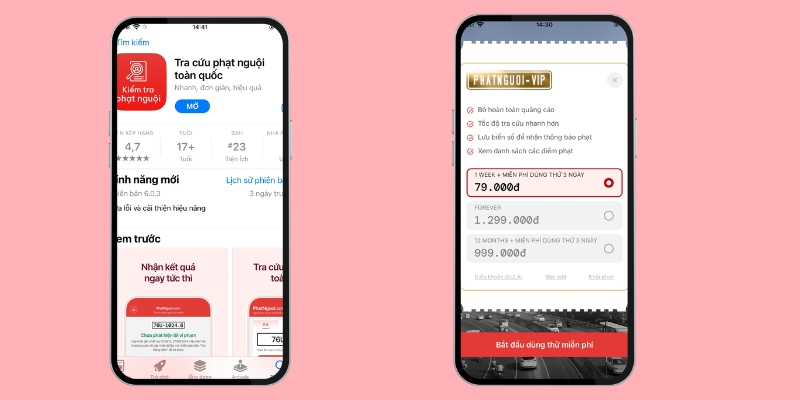
Tải ứng dụng tra cứu phạt nguội tự động

  • Tải ứng dụng với hệ điều hành iOS: tại đây
  • Tải ứng dụng với hệ điều hành Android: tại đây

Sau khi lưu biển số vào ứng dụng, nếu xe bị phạt nguội, chủ phương tiện sẽ tự động nhận được tin nhắn thông báo qua sms/Zalo.

Thực trạng làm giả biển số diễn ra rất nhiều, phải kiểm tra thường xuyên để khiếu nại với cơ quan chức năng nhanh chóng, kịp thời.

Đọc thêm: Hướng dẫn khiếu nại khi bị phạt nguội sai

Kết luận

Các hành vi làm và gắn biển số xe giải mạo không chỉ bị xử phạt hành chính với mức phạt tiền nặng mà còn có thể dẫn đến việc truy cứu trách nhiệm hình sự. Do đó bạn cần phải tuân thủ nghiêm ngặt theo quy định của pháp luật đã đưa ra. 

Nếu bạn lo lắng xe mình bị kẻ xấu làm giả biển nhằm né tránh phạt nguội, hãy cài đặt ứng dụng phạt nguội để phát hiện nhanh chóng hành vi của kẻ xấu và trình báo đến cơ quan chức năng kịp thời.

RELATED ARTICLES

LEAVE A REPLY

Please enter your comment!
Please enter your name here

Tra cứu phạt nguội trực tuyến

Tra Cứu Phạt Nguội


Most Popular